Madrid Designer’s Adaptive Apartment & IKEA Hacks
Step inside the Madrid home of an architect and furniture designer, founder of GMO studio, who, along with his good friend Anakubas and wife Ela, converted a long-abandoned 1935 social housing apartment into a bright, spacious, and incredibly fluid living space. This isn’t just a home; it’s a living laboratory where design meets daily life, blending personal passion with practical ingenuity.
From Derelict to Dream Home: A Radical Transformation When they first discovered it, the top-floor apartment in downtown Madrid was in disarray, abandoned for nearly a decade with broken windows and even a flock of pigeons calling it home. It was a warren of small, divided rooms – a narrow hallway, a tiny entrance, a separate kitchen, bathroom, and a “strange living room”. Their vision was to create an atmosphere of light and openness, heavily inspired by Japanese architecture, which typically places furniture closer to the floor to enhance the perception of high ceilings.
Their ultra-specific approach to this transformation began with a bold move: removing most of the internal walls. This single decision was the cornerstone of achieving the desired fluidity and spaciousness.
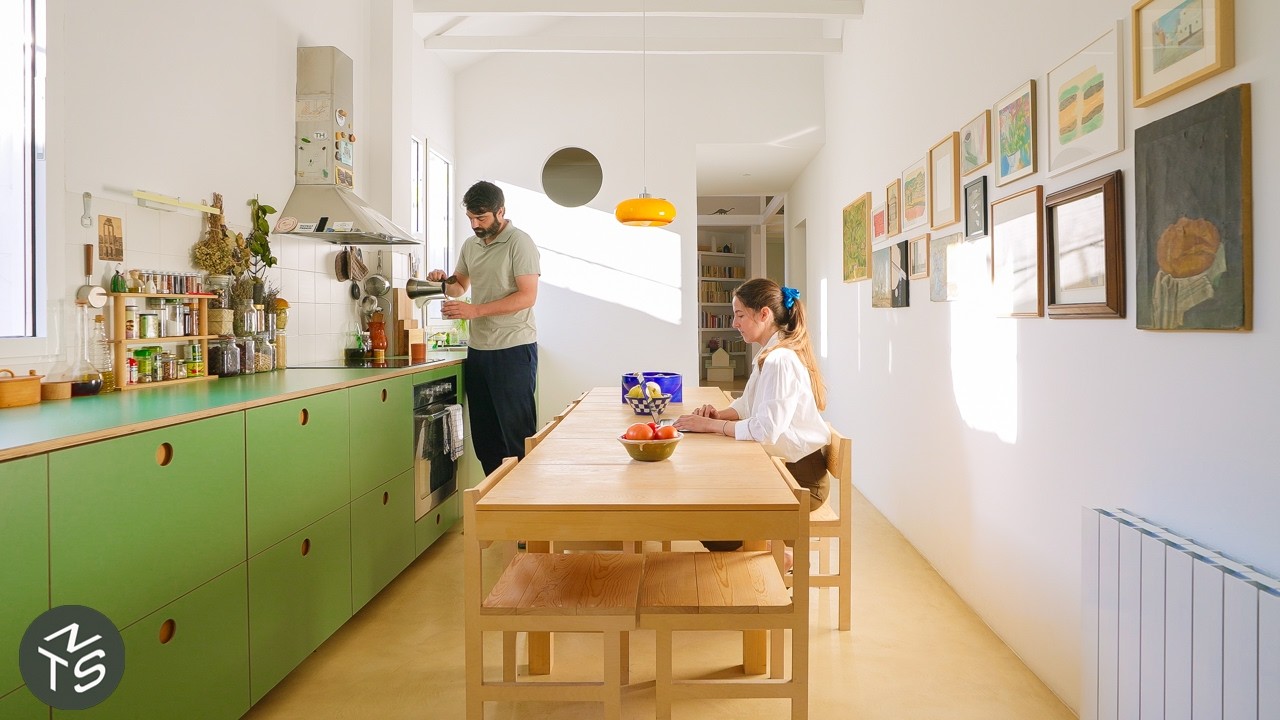
The kitchen was reimagined and moved to a large space at the front of the apartment.
A former ochre hallway found new life as a laundry room.
The living room, office, and bedroom were combined into a single, expansive area connected to a small balcony. This created a much better flow throughout the apartment.
IKEA Hacks and Resourceful Design: Where Utility Meets Uniqueness This apartment is a masterclass in useful and unique design solutions, demonstrating how readily available materials can be elevated into custom, thoughtful pieces. The designer’s deep interest in how everyday objects, their shapes, functions, and materials make us feel is evident in every corner. The home is deliberately filled with raw samples and prototypes, serving as a constant source of inspiration.
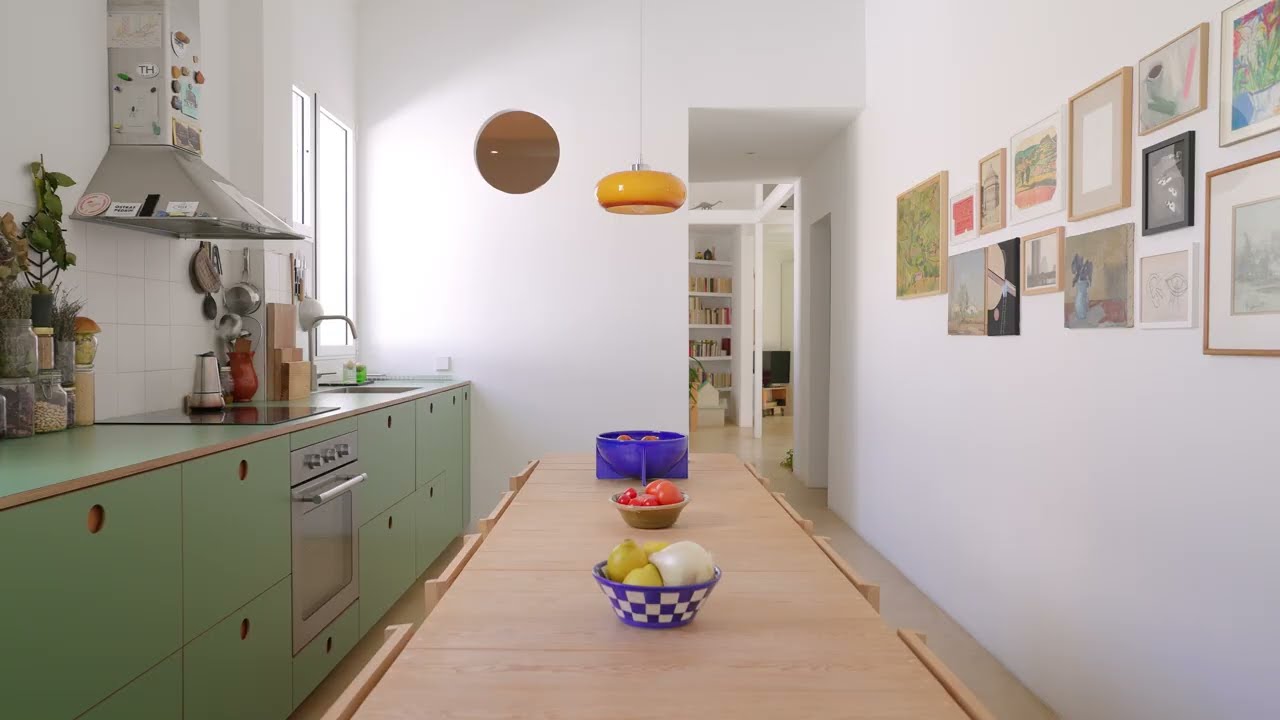
The kitchen, for instance, perfectly exemplifies this blend of affordability and bespoke design. While the core structure is from IKEA, it’s been customized with doors and countertops from Kubra, making it feel entirely unique. The pale green color choice for the cabinets creates a subtle contrast with the white walls, avoiding an overly vibrant feel. The designer sees his kitchen as a “workshop,” where tools, spices, and food are visibly accessible, fostering a dynamic environment for ideas. Instead of standard refrigerator magnets, they’ve created a collection of “meaningful souvenirs” by simply attaching magnets to the back of cherished objects.
Further embracing resourcefulness, the dining table and chairs were designed and built specifically for the space using extra materials from another client project. This clever use of “spare materials and leftovers” is a recurring theme, ensuring nothing goes to waste.
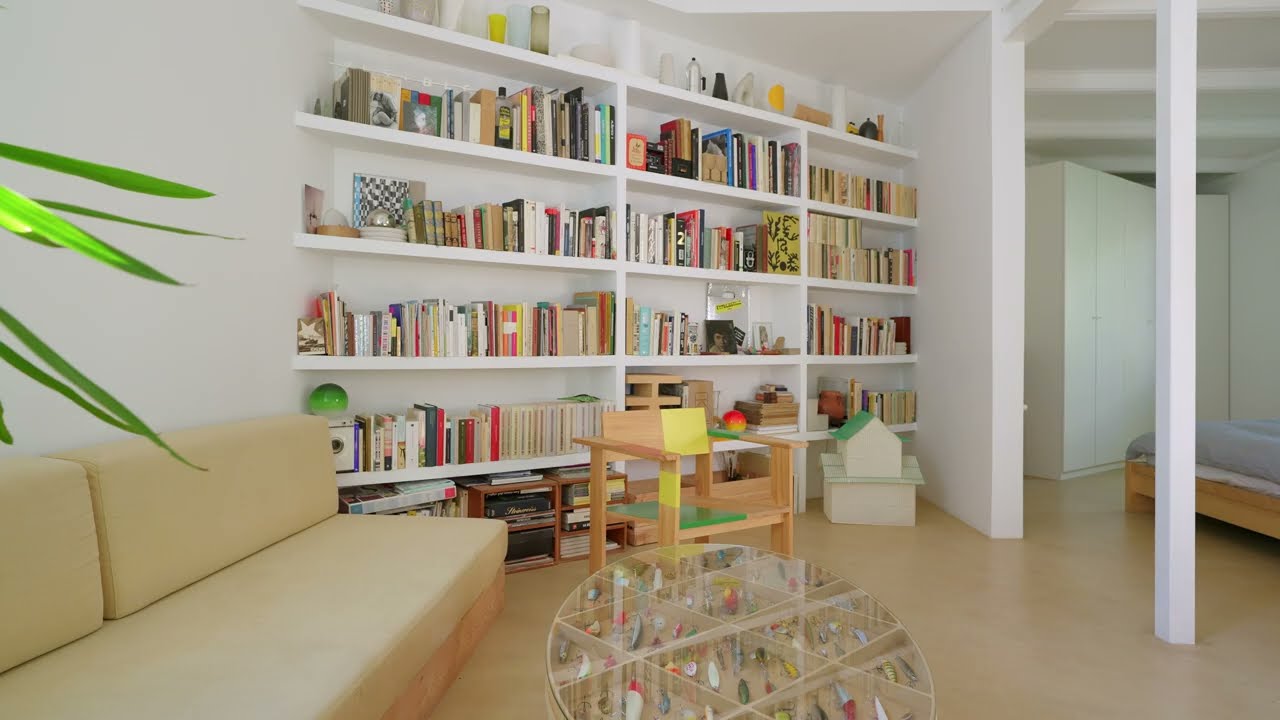
Crafting Atmosphere: Light, Layers, and Personal Stories The living room, a calm and relaxing space designed for unwinding, features “slow furniture” to amplify the sense of space. It’s a treasure trove of the designer’s own creations – many still prototypes – alongside other objects that hold personal stories and meaning. A particularly unique piece is the collector’s table, designed to display collections; in this case, the owner’s fascination with fishing reels. The sofa, crafted from scrap wood, even doubles as a guest bed by simply removing the back cushions.
Lighting is an obsession throughout the apartment. In the kitchen, lights are either wall-mounted or low pendants. The living room boasts unique lamps, including the “sunset lamp,” co-designed with Injia, which recreates the warm gradients of a sunset using bent material to evoke the feeling of being “melted because of the heat of the bulb”. This space is constantly evolving, with new ideas emerging daily, such as using the exposed wooden beams (revealed after removing the false ceiling) to hang laundry or bed sheets.
The floor throughout the apartment is a distinctive composite of cement resin and albero sand – a type of sand found in Spain, often seen in bullfight pits. The designer finds joy in the idea that his furniture is like “toys scattered in a sand pit” on this unique surface.
Ingenious Spatial Solutions in the Private Quarters The floor plan of the bedroom is “a little bit weird,” leading the designers to create a central island incorporating both the bed and a desk. This desk ingeniously transitions from a workspace during the day to a bedside table at night, a “Frankenstein of a lot of leftovers” from the workshop. Even a standard IKEA wardrobe was adapted by rotating it to fit perfectly into a corner, its white color ensuring a neutral presence. The bedroom benefits from the most beautiful light in the house, with acacia trees outside creating captivating shadows on the walls in the afternoon.
An ultra-specific and useful storage solution was found above the removed ceilings, providing extra space for seasonal clothes and design prototypes, accessed by a versatile ladder. The TV, mounted on a small rolling stand made from IKEA pieces, offers incredible flexibility, moving effortlessly from the bedroom to the living room for movie nights or dinners.
The bathroom, located in the center of the house, presents its own set of clever solutions. By extending the albero sand onto the walls, it evokes a “cave-like” feel. To reduce visual clutter, a single large mirror was installed, making the space feel more expansive. For the soap holder, a scrap piece of marble found on the street was fixed to the wall, showcasing a love for contrasting textures. Similarly, two small wardrobes in the corner were customized with street-found marble. Despite having no windows, the bathroom is surprisingly bright due to circular windows added to either end, allowing light to pass from the kitchen and living room, often eliminating the need for artificial lighting during the day.
A Philosophy of Anti-Standardization Throughout the apartment, the designer’s philosophy shines through: a deep fascination with boat designs, where every last space is optimized and ergonomic. He thrives on finding “specific solutions to specific problems” and deliberately operates “contrary to a standardization,” stating, “I really hate the standard”. The values he pursues in his work are diversity, adaptation, balance, functionality, versatility, and, above all, the provocation of emotion and wonder.
This Madrid apartment is more than just a beautifully renovated space; it’s a testament to the power of thoughtful, personal design, proving that limitations can spark the most inventive and unique solutions.