24sqm | Sydney: A Blueprint for Compact Urban Living
In the dense urban fabric of cities worldwide, the challenge of optimizing compact footprints is paramount. Take Sydney, for example, where a mere 24 square meters has been masterfully re-engineered into a highly functional and spatially intelligent residence. This isn’t just about fitting things in; it’s about a fundamental rethinking of how we inhabit small spaces. Welcome to the ‘Boneca’ apartment.
Located in Rushcutters Bay, a prime Sydney suburb offering walking distance access to both the city center and Sydney Harbour, this project is situated within a 1960s building housing approximately forty units of similar scale. The original 24-square-meter apartment presented a common challenge: an inefficient layout with a corridor leading into a combined kitchen, living, and bedroom area. The design team’s initial, decisive move was to completely demolish the existing interior. Their core programmatic intent was clear: to establish a “strong divide between what’s sleeping and what’s living”, thereby containing the private and utility functions to the smallest possible area to maximize the perceived scale of the living space.
Here’s a breakdown of the key design strategies that make this micro-apartment a compelling case study:
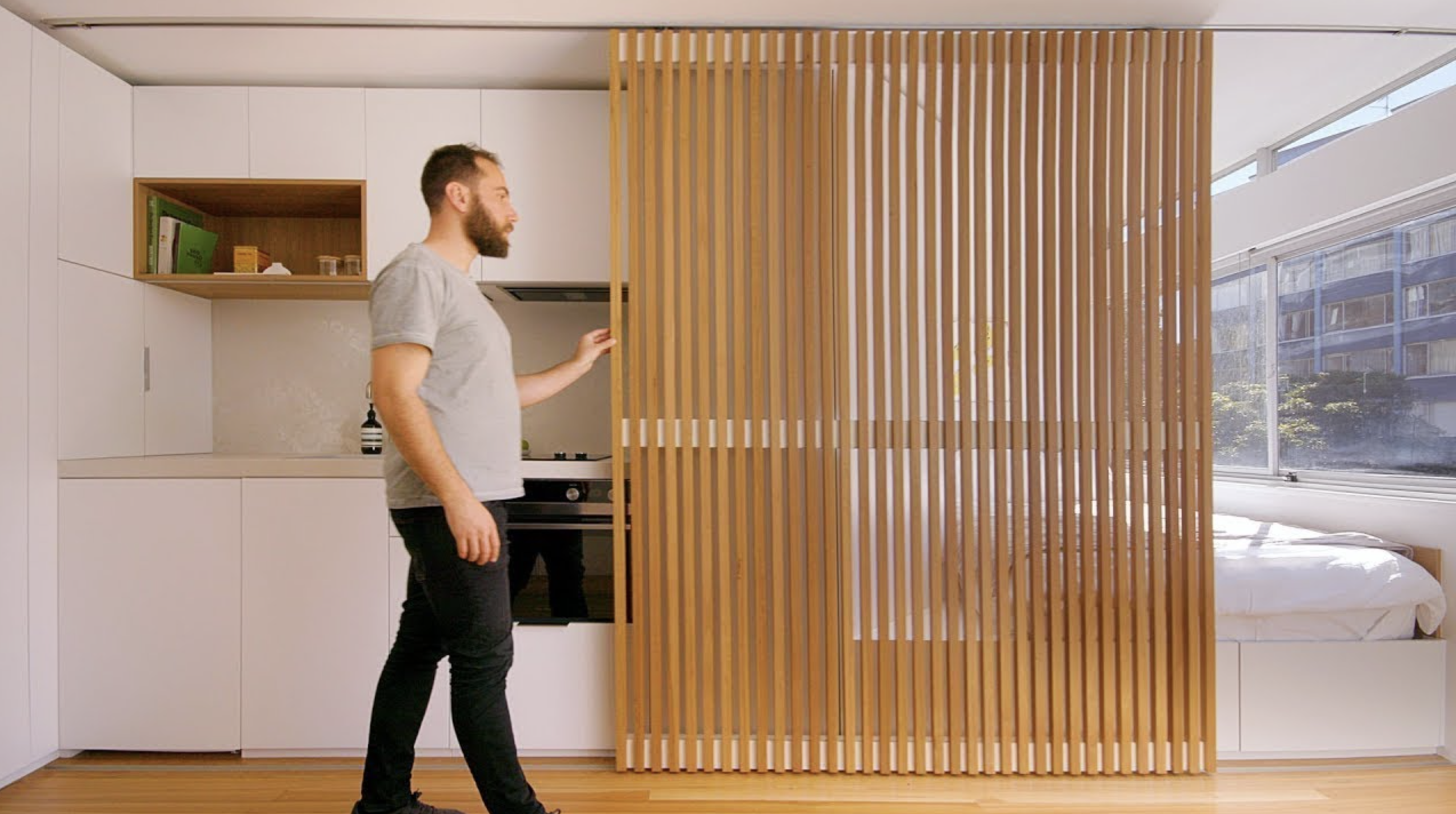
Dynamic Spatial Division: A crucial element in this spatial strategy is the timber sliding screen. This isn’t merely a partition; it’s a dynamic architectural component that reconfigures the apartment’s program throughout the day. When closed, it creates a visual separation for the bedroom, while still allowing light penetration. Flexibly, it can also slide over the kitchen area, thereby opening up the sleeping zone. The choice of a black finish for the screen, matching the apartment’s black floor, reinforces a cohesive, minimalist aesthetic.
Optimized Sleep Core: The sleeping zone itself demonstrates intelligent space utilization. The bed is raised to integrate ample drawer storage beneath, a critical feature for any micro-unit. A minimalist open shelf functions as a bedside table, subtly incorporating integrated lighting.
Leveraging Natural Light and Volume: A standout feature of this particular unit is its full-width windows. The design strategically emphasizes these by angling the joinery unit adjacent to the bed. This deliberate angling helps to “pick up light and a sense of space”, effectively expanding the apartment’s visual footprint through light reflection.
Integrated Wet Zones: A clever consolidation of functions is evident in the combined bathroom and walk-in robe, accessed via a hidden door. This integration is key to making the “whole space feel much bigger”. Inside, the material palette of gray tiles complements the timber floor, imparting an “earthy feel”, while concealed lighting contributes to a luxurious ambiance. Furthermore, a full-length mirror strategically placed just inside the door immediately provides a “sense of a larger space”.
Efficient Kitchen Program: The kitchen, though compact, was “really carefully considered” to deliver full functionality. It comprehensively includes a fridge, oven, dish drawer, and a narrow cutlery drawer. An integrated appliance cupboard and a full-height pantry are seamlessly incorporated. The minimalist material palette extends here, featuring a gray concrete benchtop and splashback, maintaining a clean, utilitarian aesthetic.
Beyond the immediate spatial efficiencies, this project offers a compelling model for sustainable urban development. Cities like Sydney, with their “amazing old housing stock that’s been solidly built and isn’t going anywhere”, present a significant opportunity. The refresh and repurposing of such existing structures are highlighted as “one of the most sustainable ways we can continue to grow our cities”, demonstrating how thoughtful design can contribute to responsible urban densification.